Before Fan Magazines, Clubs Made Fandom Social
Fan clubs before fan magazines connected admirers through letters, meetings and shared keepsakes, while publications later brought celebrity coverage to wider audiences.
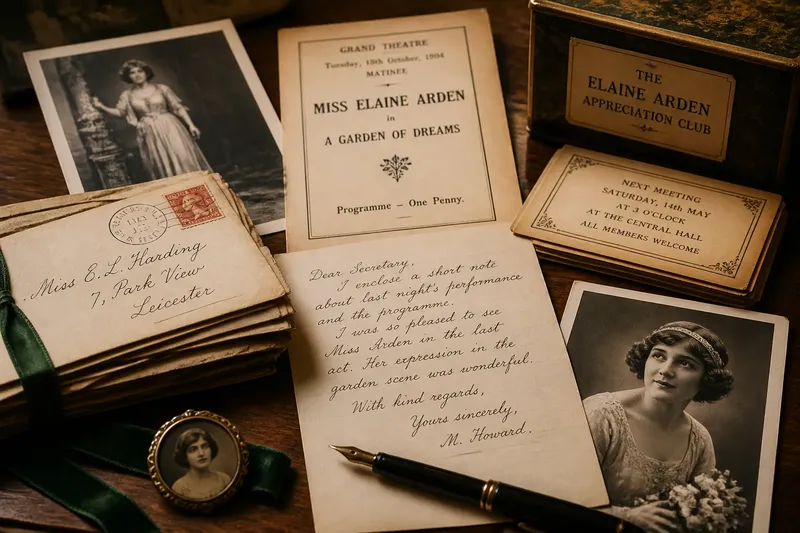
Fan clubs before fan magazines made admiration a shared activity: members wrote to one another, met locally and exchanged theatre programmes. Their history is best understood as a story of overlapping forms of fandom, not a universal sequence in which clubs everywhere came first and magazines later took over.
Local circles and letters
In the late nineteenth and early twentieth centuries, admirers could form clubs around stage performers and other public entertainers. The details varied by place and group; surviving club notices, correspondence and programmes offer firmer evidence than a broad claim that every fan community followed the same pattern.
Letters and printed circulars helped members who lived too far apart to meet regularly. A club secretary might share a meeting notice, collect members’ comments or circulate news about a performer’s public appearances. These routines turned private interest into an organised social connection, though they depended on volunteers and the post.
Imagine a small club whose members live in several towns and have collected programmes from the same touring performer. Its secretary could invite each member to send a short note about a programme, then circulate the notes together; the result would be a shared account based on named contributions, not a claim to speak for every admirer.
What magazines changed
Fan magazines made celebrity material available in a recurring publication rather than relying solely on club correspondence or local meetings. Readers could encounter photographs, interviews, profiles and entertainment news in one place, then discuss the same material with friends or fellow club members.
A magazine and a club offered different kinds of participation. The publication could address many readers at once, while a club gave members a way to correspond, meet and contribute their own material. In practice, the formats could complement one another: a magazine supplied a common subject for conversation, and a club provided the conversation itself.
Magazine coverage also shaped which performers and stories received attention. Editors selected material for publication, so the pages represented editorial choices rather than a complete record of what every fan cared about. Club letters and records can add another perspective, although they too reflect the people who took part and the documents that survived.
Evidence and its limits
Researchers looking into fan clubs before fan magazines can start with periodicals, theatre programmes, letters, club circulars and meeting notices. A dated notice may establish that a particular club invited members to a particular gathering; a letter can reveal how one correspondent described a performer or club activity.
Each source has limits. A membership list records names, not necessarily attendance or enthusiasm, and a club secretary’s account may not represent quieter members. Magazine features reveal what editors chose to publish, not a neutral summary of all fan activity.
Keeping those distinctions in view helps separate an observed event from hearsay. A programme can document a public performance, while a repeated story about a performer’s private life needs a different kind of corroboration. Historians can compare independent records without treating club papers or magazine pages as complete accounts.
Why did fandom take different forms?
Did clubs exist before fan magazines?
Some organised fan activity took place through clubs and correspondence, but the timing differed by performer, location and publication. It is safer to compare dated examples than to claim that clubs universally preceded fan magazines.
What did fan magazines offer?
They gathered celebrity-related material into a repeatable format, making it easier for readers to follow performers and share articles or images. Their editorial selection also influenced which stories reached readers.
Did magazines replace fan clubs?
No simple replacement fits every community. A magazine could provide material for discussion, while a club offered direct contact and member-led activity.
What can club records establish?
Letters, notices and programmes can document particular exchanges, gatherings or interests. They cannot by themselves show what all admirers thought, especially those who never joined or whose records did not survive.
Reading the record
The change brought by fan magazines was not simply that fans gained information; they gained a recurring, shared publication that could connect readers beyond a club’s immediate circle. Clubs, in turn, preserved a more personal kind of participation through correspondence, gatherings and collected objects.
For anyone tracing fan clubs before fan magazines, the most useful question is often specific: who created a record, when did they create it, and what activity does it actually describe? That approach keeps the history grounded while leaving room for the varied ways people made fandom social.